On January 1, 1804, in the port of Gonaïves, Jean-Jacques Dessalines and his generals declared independence for the colony of Saint-Domingue. They restored the indigenous Taíno name Haiti—“land of mountains”—and created the first independent Black republic in the world and the second free nation in the Americas, after the United States. Formerly enslaved people and free people of color had defeated Napoleon’s armies and abolished slavery in what had been France’s richest colony.
The culture that followed independence did not appear from nowhere. Long before 1804, a substantial free Black and mixed-race population already lived inside the French colonial world of Saint-Domingue. By the late 1780s, free people of color (*gens de couleur libres*) numbered roughly 25,000 to 28,000—nearly equal to the white population and almost half of all free inhabitants. Many were born free; others had purchased or been granted their freedom. They owned approximately one-third of the colony’s land and one-quarter of its enslaved people. Wealthy families ran coffee and sugar estates, worked as merchants and skilled artisans in Cap-Français and Port-au-Prince, and served in the colonial militia. They practiced Catholicism, spoke French, educated their children in French manners (sometimes in France itself), and adopted European dress and social habits. Agostino Brunias’s paintings from the period capture free women and men of color in precisely this milieu—linen markets, family portraits, and urban scenes that show European clothing and the visible markers of free status.
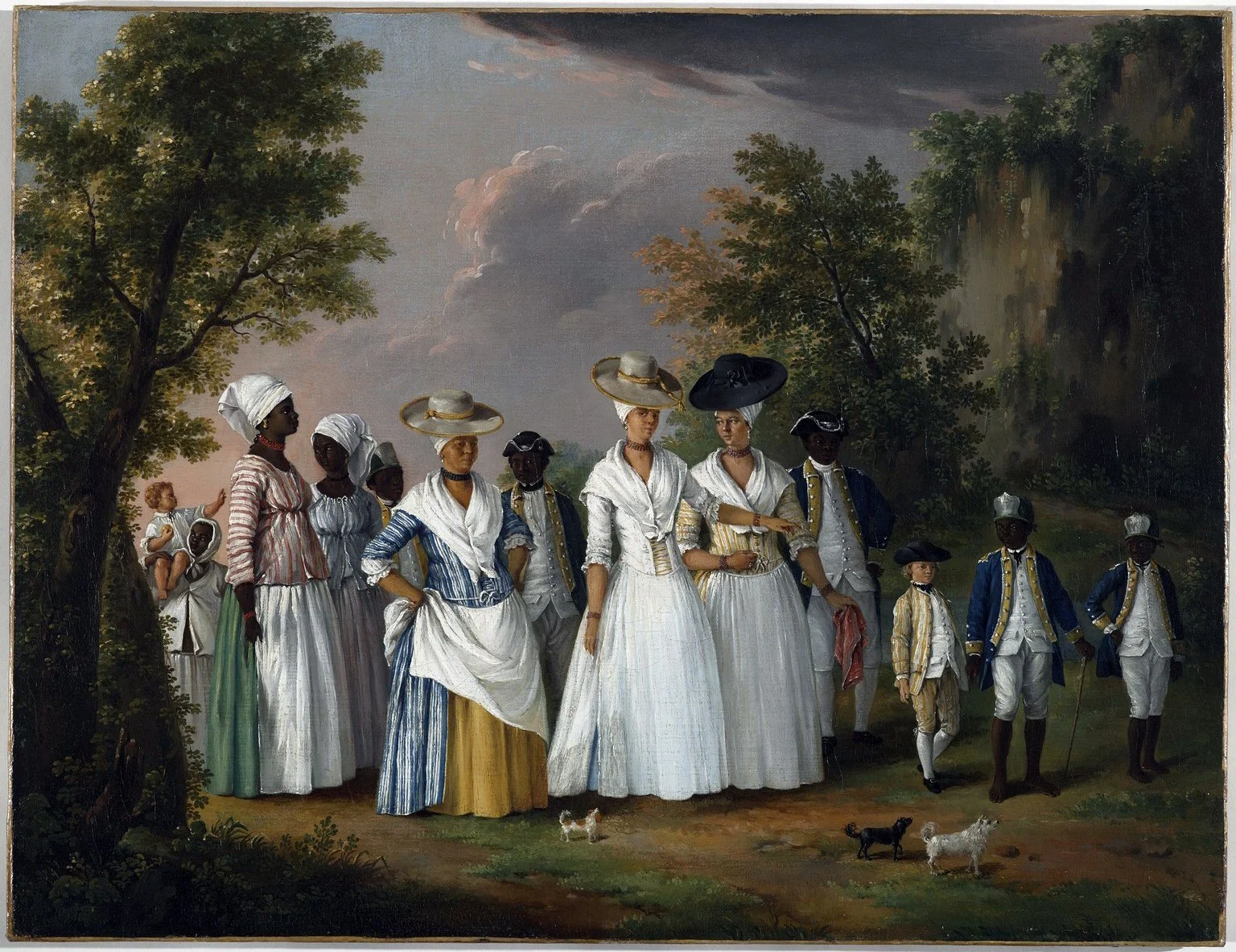
Free Women of Color, Agostino Brunias
Discriminatory laws limited certain professions, public displays, and intermarriage, yet economic participation was real. Notarial records document substantial property holdings, loans, and family strategies for advancement. Julien Raimond, a wealthy southern planter, petitioned the French National Assembly for civil rights. Vincent Ogé, a Cap-Français merchant and landowner educated in France, later led an armed demand for those rights. Even Toussaint Louverture, before the revolution, lived as a freedman managing property within these networks. The free colored elite’s prosperity was built inside the slave system, yet their cultural and economic presence created a living model of Black participation in the free French world—one that independent Haiti would deliberately extend.
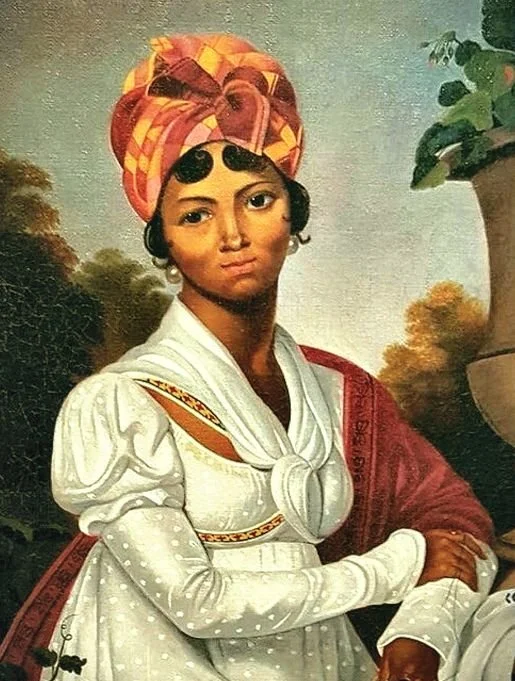
Queen Marie-Louise Coidavid
After independence, Dessalines briefly ruled as Emperor Jacques I. Following his assassination in 1806, the country divided. In the north, Henri Christophe became King Henry I (1811–1820) and established a hereditary monarchy complete with nobility, European-style court etiquette, and monumental architecture. He created titles—dukes, counts, and barons—often drawn from colonial place names such as Marmelade and Limonade. Nobles and officers wore embroidered coats, white breeches, gold buttons, and orders of chivalry. English artist Richard Evans painted the king and his family in formal Regency dress; other portraits show Queen Marie-Louise Coidavid and their children in the same European court style. The continuity was deliberate: the new court took the French colonial forms already practiced by free people of color and placed them at the center of a sovereign Black state.
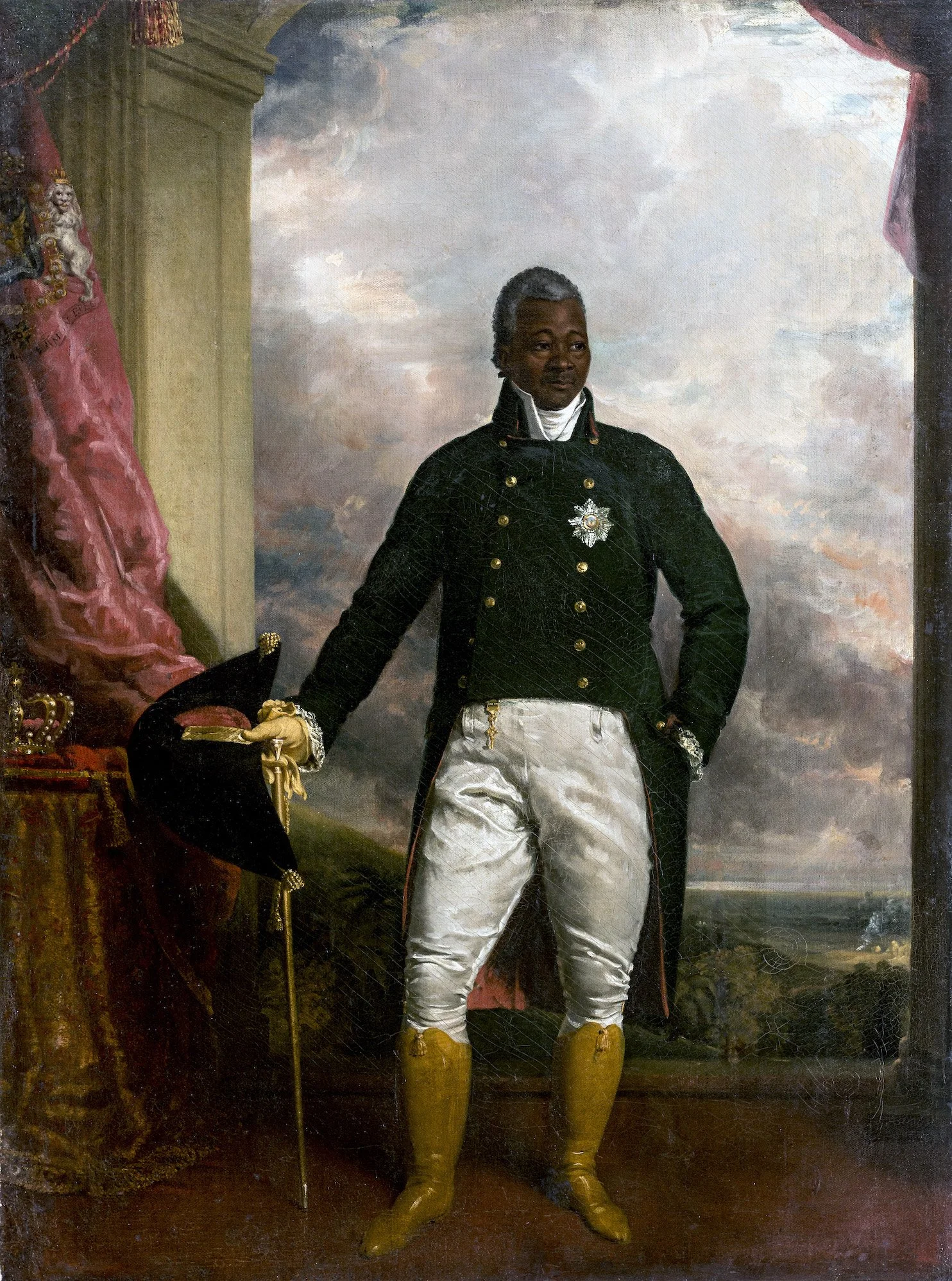
King Henri I by English artist Richard Evans.
Christophe’s principal residence, the Palace of Sans-Souci near Milot, was built between 1810 and 1813 as a tropical Versailles. It contained reception halls, a private theater, marble and mahogany interiors, silk curtains, fountains, and formal gardens with elaborate waterworks. Visitors described feasts, balls, and concerts performed by a royal philharmonic. Nearby stood the massive Citadelle Laferrière, a mountaintop fortress designed to repel any French return. These buildings were statements that free Black people could master the architectural and ceremonial language of European high culture while defending their independence. Christophe’s Code Henry regulated daily life with the detail of European legal codes, and he sought British recognition through correspondence with abolitionists such as Thomas Clarkson.
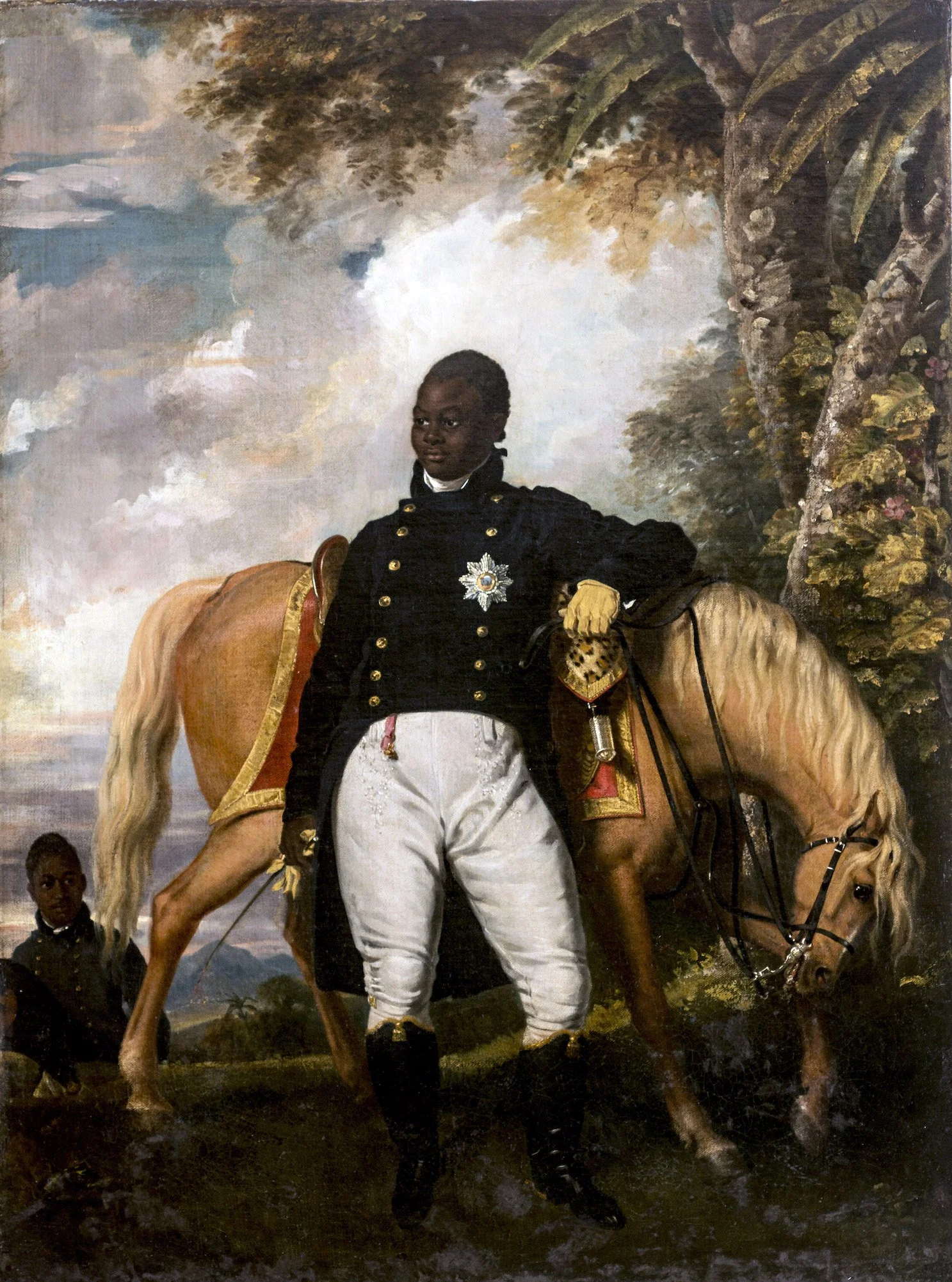
Royal Prince Jacques-Victor-Henri Christophe , Richard Evans
Catholicism remained the faith of the elite and received official protection from the beginning. Early constitutions favored the Catholic Church. After decades of Vatican reluctance to recognize a Black republic, the 1860 Concordat with Rome formalized that status, brought French-speaking clergy, and expanded Catholic schools for the urban elite. Vodou continued among the rural majority, but the public culture of the state was Catholic and Francophone—extending the religious practice already common among colonial free people of color.
Education followed the same pattern of ambition and limitation. Of the roughly 500,000 to 600,000 people in early independent Haiti, the large majority were former slaves, many African-born and illiterate. Formal schooling reached mainly a small urban elite drawn from the pre-revolutionary free colored population or from those who had risen in the revolutionary army. Christophe imported British teachers and opened schools; later governments expanded lycées and Catholic institutions. By the later nineteenth century, enrollment reached tens of thousands, yet rural literacy stayed near zero well into the twentieth century. The elite treated French language, classical learning, and European manners as proof of what they called Black excellence—continuing the cultural participation free people of color had already achieved under French rule.
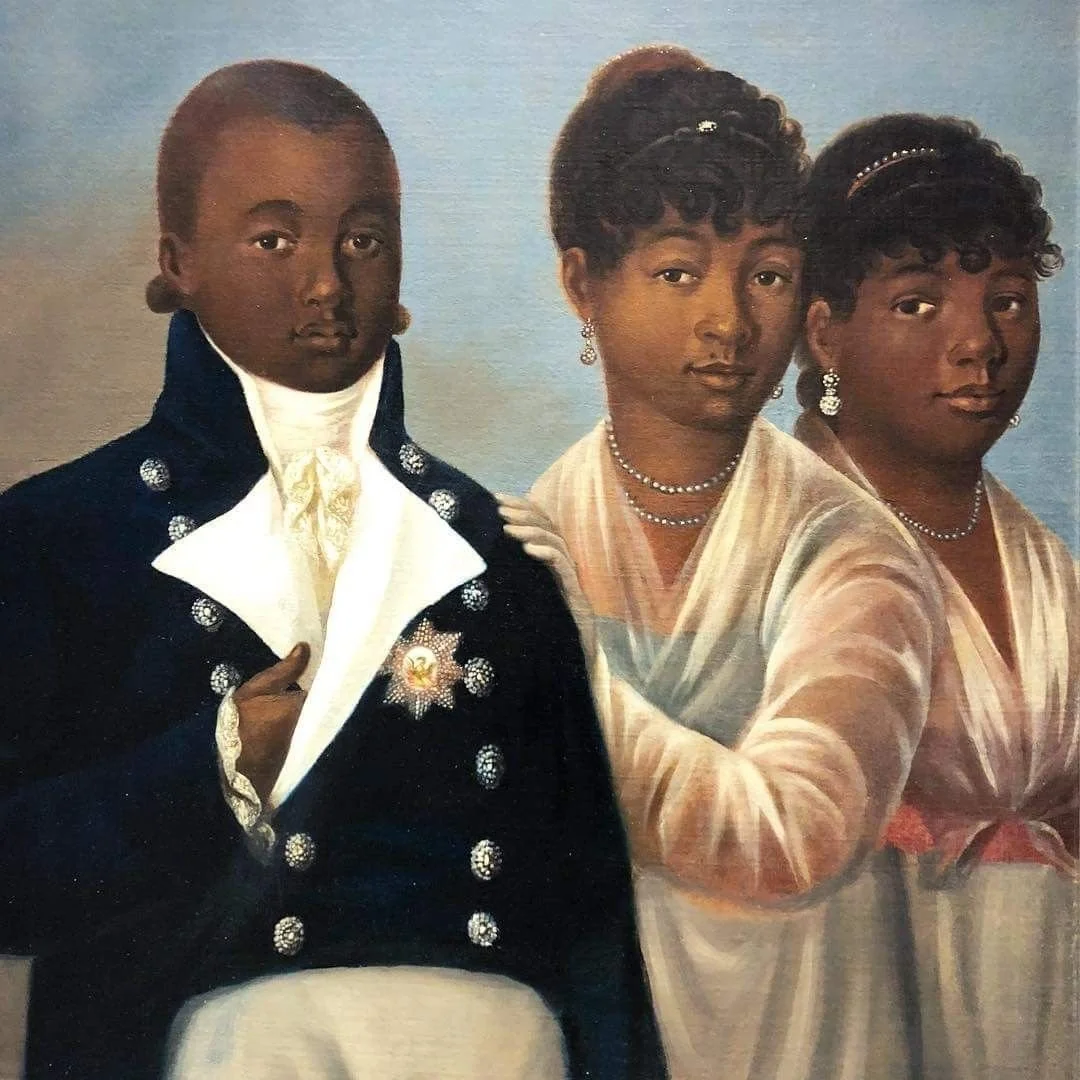
Jacques-Victor, prince royal of Haiti, Anne-Athénaïre, and Françoise-Améthyste, children of Henri Christophe, king of Haiti, and Marie-Louise Coidavid, unknown artist, 1810s
This project was interrupted by the indemnity France imposed in 1825. After two decades of refusing recognition, France sent warships and demanded 150 million francs (later reduced to 90 million) as compensation for property lost by former colonists, including the people themselves. Haiti borrowed from French banks to make the first payments, creating a double debt. Over subsequent decades the country remitted the equivalent of roughly $560 million in today’s dollars. A 2022 New York Times investigation calculated the long-term cost in lost growth at $21 billion (using Haiti’s own historical rate) to $115 billion (using the growth of neighboring Latin American economies). The first installment alone exceeded several years of government revenue. Money that might have built schools, ports, or industries left the island instead. Per capita income today could have been several times higher without the indemnity.
Isolation, internal divisions, later foreign interventions, and chronic underinvestment produced the poverty and instability that now dominate international images of Haiti. In recent decades another cultural force has filled much of the visible space: American hip-hop. Born in the Bronx in the 1970s and later shaped by gangsta styles that dramatized street life and material display, hip-hop became a global language of Black urban experience. Through the large Haitian diaspora and modern media, these aesthetics have influenced younger Haitians. The contrast is sharp. Historical Haitian high society—rooted in the colonial free colored elite and extended under independent kings and presidents—emphasized European formality, literacy, Catholicism, and monumental ambition. Contemporary popular imagery often emphasizes the opposite.
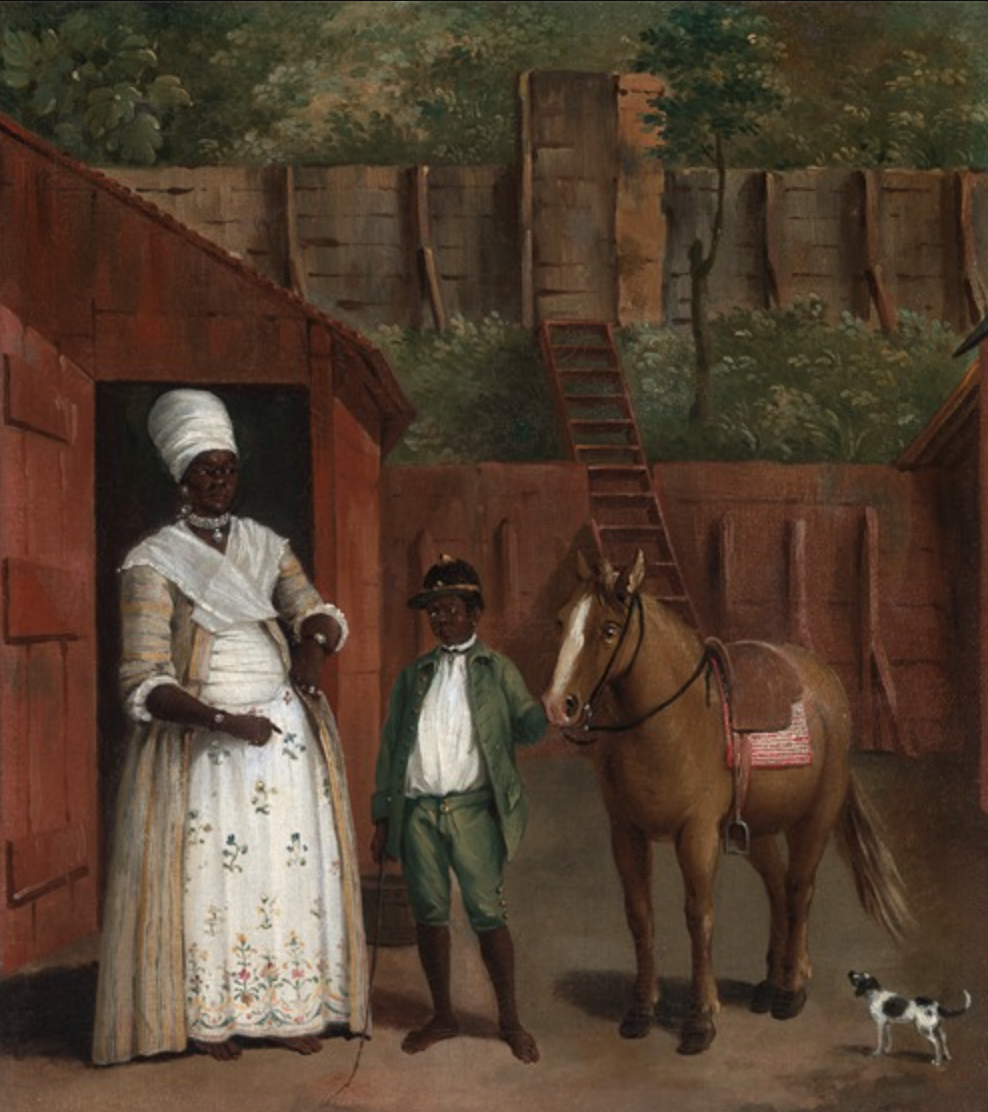
A Mother With Her Son And A Pony (circa 1775)
This is not an argument against hip-hop’s artistic power or its ability to give voice to the marginalized. It is an observation that the most widely exported modern Black cultural form has little connection to the courtly, Catholic, French-educated elite culture that independent Haiti’s founders deliberately cultivated, building on the free Black participation that already existed in the French colonial world. That earlier culture is not widely taught. Decades of poverty and political crisis have obscured the colonial free colored planters and merchants, the post-independence palaces, the nobility, the balls, and the deliberate pursuit of international respectability.
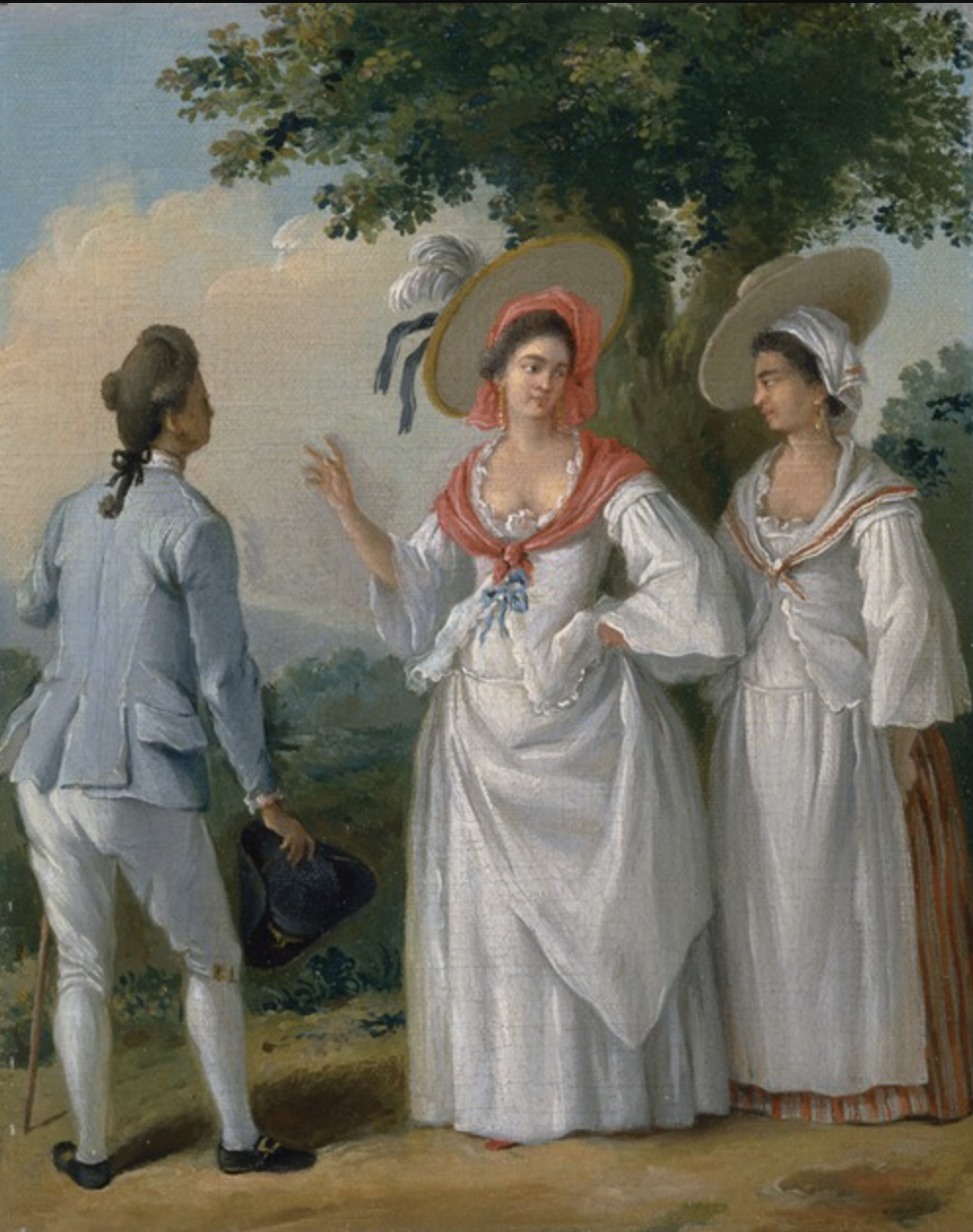
Free West Indian Creoles, Agostino Brunias
Recovering this history does not require romanticizing absolute monarchy or ignoring the labor systems and color hierarchies that persisted. It does require acknowledging that the first free Black nation in the Americas was not born in isolation from sophisticated free Black society. Its colonial free people of color already owned land and slaves, practiced French high culture, and claimed rights within the free French world; its early leaders consciously extended those standards into a sovereign state. The indemnity and the financial arrangements that followed made sustained recovery far more difficult.
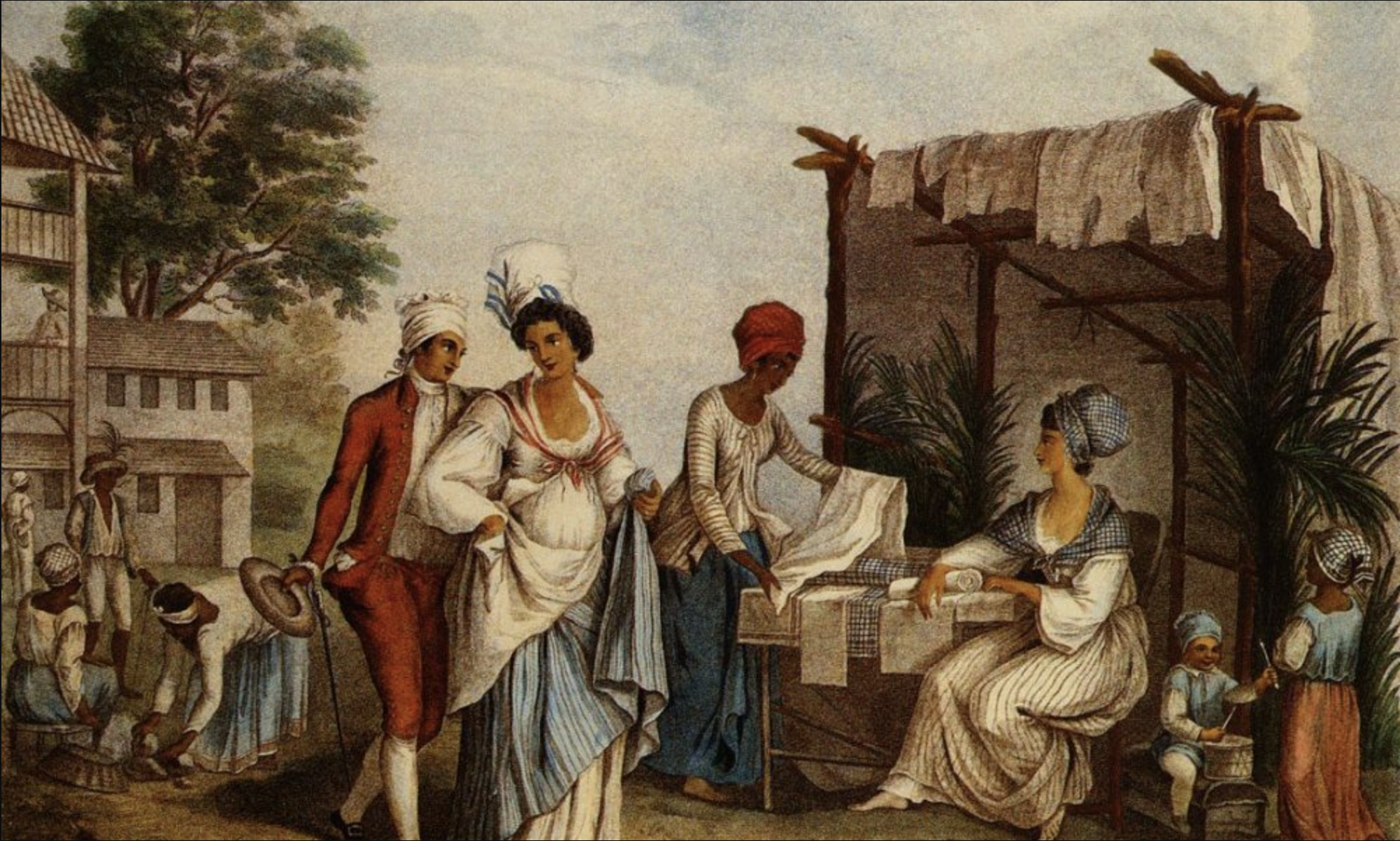
The Linen Market at Saint-Domingue, Agostino Brunias
For Haitians and for Americans of all backgrounds, greater knowledge of this record can serve as a bridge rather than a barrier. Shared awareness of the free colored elite of Saint-Domingue, the revolutionary achievement, the courtly ambitions of Sans-Souci, the educational aspirations of the early elite, and the measurable economic cost of the French indemnity supplies a common factual ground. It replaces one-dimensional images—whether of perpetual victimhood or of imported street aesthetics—with a more complete story of agency, sophistication, and the concrete obstacles that followed. That kind of history can raise expectations: free Black societies have produced formal institutions, high culture, and state-building projects long before modern media, and understanding those precedents is one practical step toward stronger alliances and higher aims on both sides of the Caribbean.

Portrait of J. B. Belley, Deputy for Saint-Domingue by Anne-Louis Girodet De Roucy-Trioson