More than two centuries after the United States halted the transatlantic slave trade, the country’s population is not a simple extension of European, West African, or other continental groups. It is the product of sustained intermixture, demographic isolation from source populations, and a shared civic history that has produced measurable genetic and cultural differentiation.
The Act Prohibiting Importation of Slaves, signed in 1807 and effective January 1, 1808, ended legal importation of enslaved Africans. By 1800 the Black population already numbered roughly one million; by 1860 it had grown to about 4.4 million, almost entirely through natural increase. Illegal imports after the ban were limited to the tens of thousands—a fraction of the total growth. African Americans therefore descend from a relatively narrow slice of West and Central African populations (primarily regions corresponding to modern Nigeria, Ghana, Senegal, and Angola), plus substantial European ancestry (typically 15–25 percent in contemporary estimates) and smaller Indigenous contributions. Population-genetic studies show that African Americans form a distinct cluster relative to both modern West Africans and Europeans, reflecting founder effects, admixture, and more than two centuries of limited gene flow from Africa.
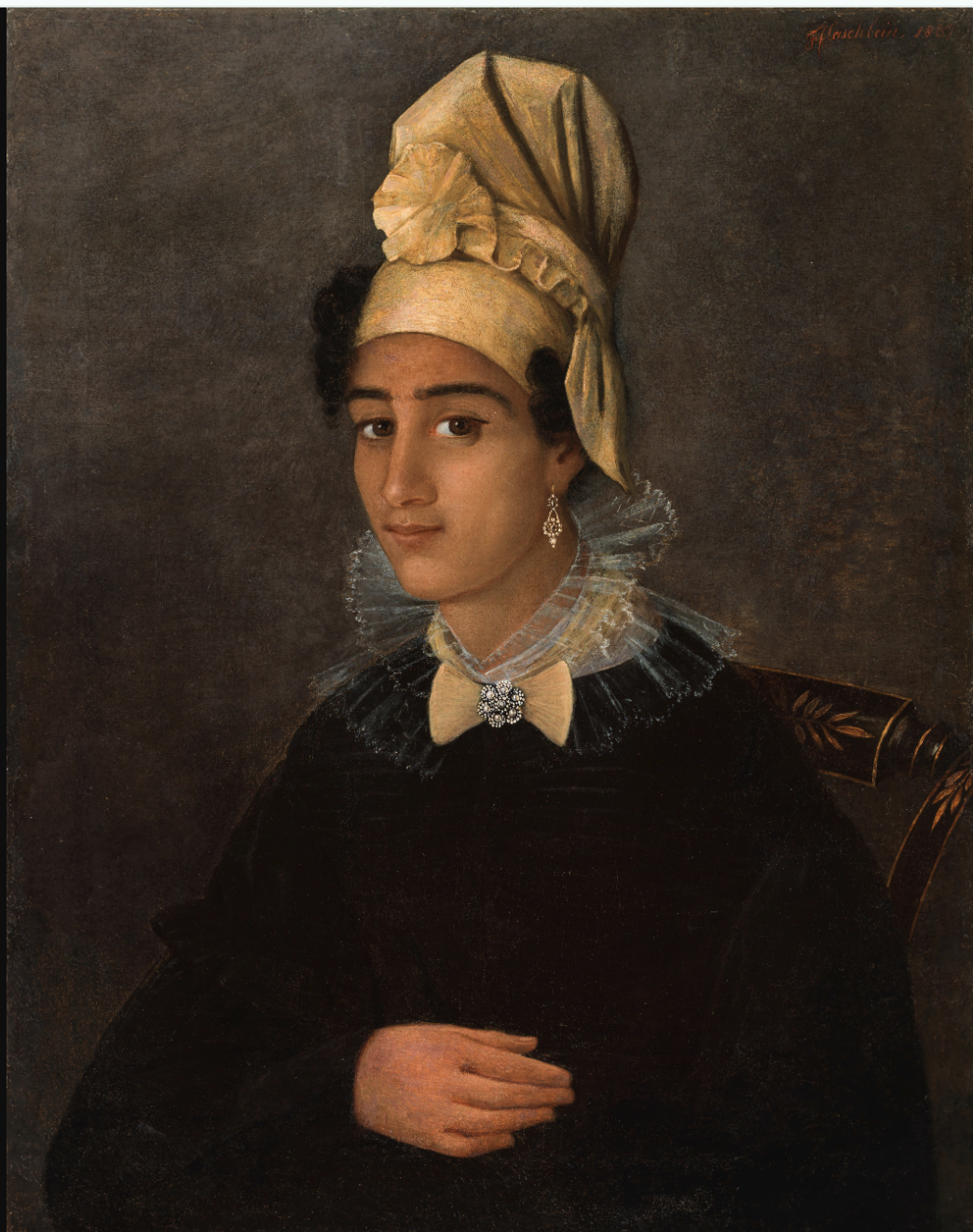
Portrait of a Free Woman of Color, François Jacques Fleischbein, 1837
This process was not confined to one group. The Louisiana Purchase of 1803, facilitated by France’s inability to reassert control over Saint-Domingue after the Haitian Revolution, incorporated a territory already shaped by French, Spanish, African, and Indigenous peoples. Louisiana’s free people of color and Creole populations occupied intermediate social and legal statuses that did not map neatly onto later Anglo-American binary categories. On the West Coast, Chinese arrivals during the Gold Rush—reaching tens of thousands by the early 1850s—entered a multiracial environment that already included Indigenous peoples, Mexicans, and others. Indigenous populations themselves absorbed European and African ancestry through centuries of contact. The result, across regions, was not pure replication of Old World groups but repeated local admixture.
Federal action in the capital reinforced this trajectory. On April 16, 1862, President Lincoln signed the District of Columbia Compensated Emancipation Act, immediately freeing approximately 3,000 enslaved people in Washington and providing compensation to loyal owners. It was the first emancipation measure enacted by the federal government and preceded the Emancipation Proclamation by months. Combined with the earlier ban on imports, these steps limited external replenishment of the enslaved population and accelerated its demographic self-sufficiency within the United States.
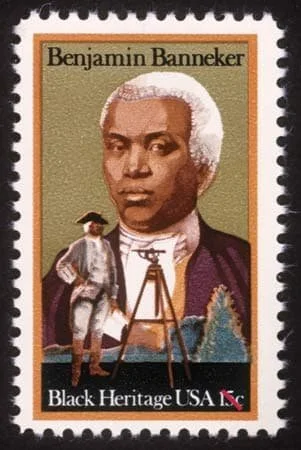
Benjamin Banneker was a mathematician, astronomer, surveyor, naturalist, and almanac author born in 1731. He was a free Black man living in the slave state of Maryland.
Mixed ancestry has been documented since the colonial period. Free mixed-race individuals appear in 18th-century records; some purchased relatives out of slavery, others formed communities that resisted rigid classification. Louisiana Creoles of color, many of mixed French, Spanish, African, and Indigenous descent, maintained distinct identities into the 19th and early 20th centuries; figures such as Arnold Bertonneau and others associated with the Plessy litigation challenged binary racial categories in law and politics. Frederick Douglass, himself of mixed ancestry, described the United States in 1869 as “a country of all extremes, ends and opposites; the most conspicuous example of composite nationality in the world,” ranging “from black to white, with intermediate shades which… no man can name or number.” Thomas Jefferson advocated intermarriage with Indigenous peoples so that “we shall all be Americans” and “your blood will run in our veins.” These were not dominant views under later Jim Crow regimes, but they reflect long-standing recognition of mixture as a fact of American demography.
Legal barriers to interracial marriage were dismantled by Loving v. Virginia in 1967. Pew Research data show that the share of newlyweds marrying across racial or ethnic lines rose from about 3 percent in 1967 to 17 percent by 2015; roughly one in ten married Americans overall was in such a union by the mid-2010s. Intermarriage rates are highest among Asian and Hispanic newlyweds and have increased across groups. These unions, layered on earlier colonial and 19th-century mixture, further differentiate the American population from pure continental source groups.
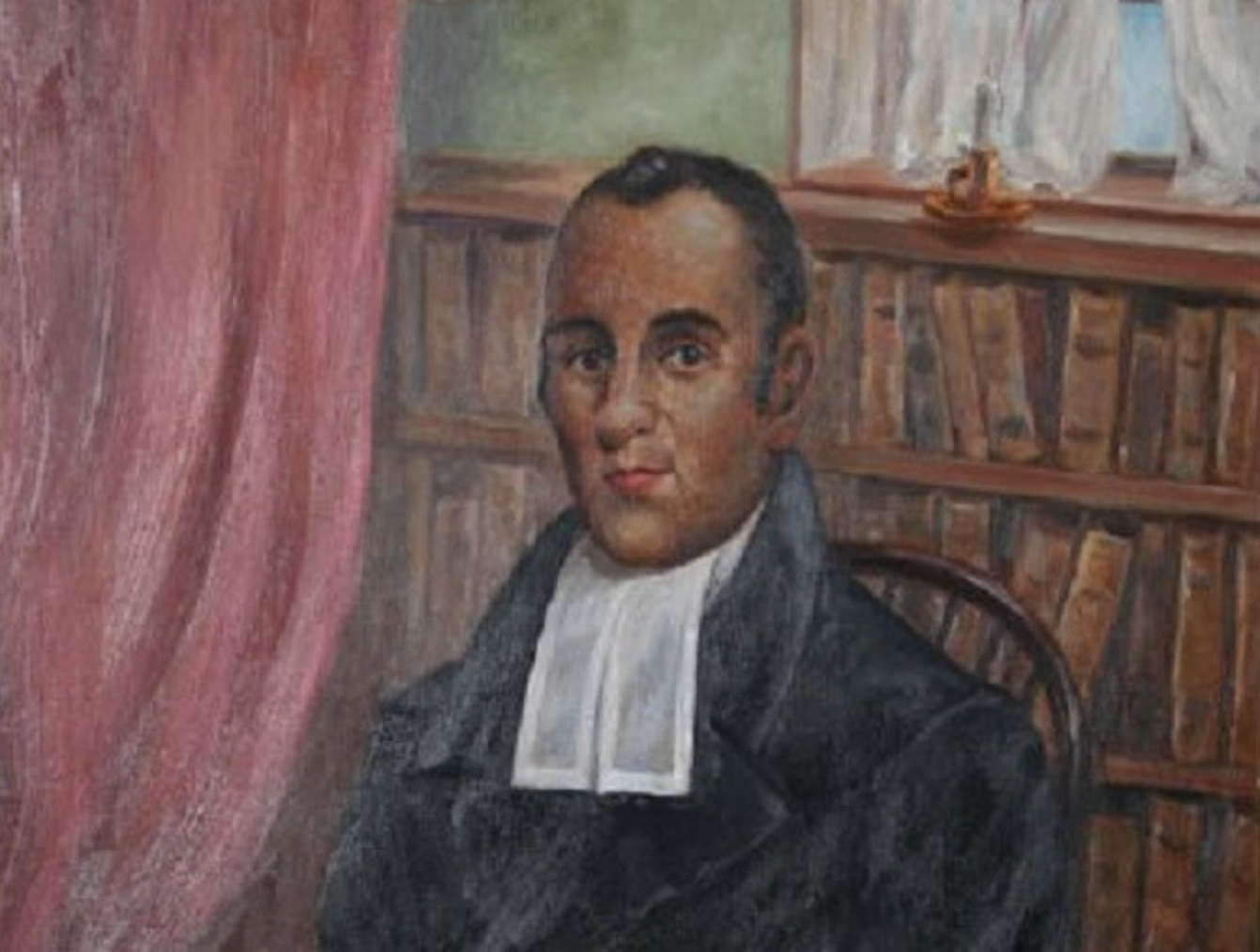
Lemuel Haynes (July 18, 1753 – September 28, 1833) was an American clergyman. Haynes was the first black man in the United States to be ordained as a minister, an revolutionary war veteran and anti slavery abolitionist
Foreign actors have exploited existing tensions. The Internet Research Agency and related Russian operations amplified racial narratives during the 2016 election and the 2020 period, creating or boosting content on both sides of protests associated with Black Lives Matter. FBI Director Christopher Wray testified in 2020 that Russia and China sought to “piggyback” on unrest following the killing of George Floyd to sow division. Similar patterns of state-linked media amplification of Western domestic conflicts have been documented in other countries. These efforts do not create underlying disagreements, but they increase their volume and visibility, framing American institutions as uniquely hostile to group coexistence. Domestic narratives that attribute all friction to “the powers that be” in Washington often overlook documented foreign information operations aimed at national cohesion.
The American population’s genetic and historical distinctiveness does not erase continental ancestry or deny the reality of group differences. It does mean that treating African Americans as interchangeable with contemporary sub-Saharan Africans, or European Americans as identical to current populations in Britain or Germany, misstates both demography and history. Shared institutions, intermarriage, and centuries of joint habitation have produced a population whose members are more closely related to one another, on average, than to their distant continental counterparts. Recognition of that formation—rather than perpetual emphasis on unassimilated difference—aligns with the practical interest of any government in social stability and with the long record of Americans who have argued for a composite national identity.