The Virgin of Tehran:Does This Represent a Shift in the Islamic Republic, or Do We Have the Wrong Narrative?
In the underground bustle of the Tehran Metro’s Line 6, there is a space that feels less like a transit hub and more like a cathedral. Beneath the sprawling, smog-veiled bustle of the Iranian capital, commuters are blessed by an image that defies the Western narrative of the Islamic Republic: the serene, gold-haloed gaze of the Virgin Mary.
The Maryam-e Moghaddas (Holy Mary) Metro Station, which officially opened its doors in late 2024 near the St. Sarkis Armenian Cathedral, serves as a striking visual rebuttal to the monolithic portrait of Iran often painted in the West. This is not the Iran of grayscale orthodoxy; it is a space of arched concourses, religious frescoes, and a sophisticated acknowledgment of a shared sacred history.
Inside the Maryam-e Moghaddas Station: Tehran’s Most Beautiful Public Art
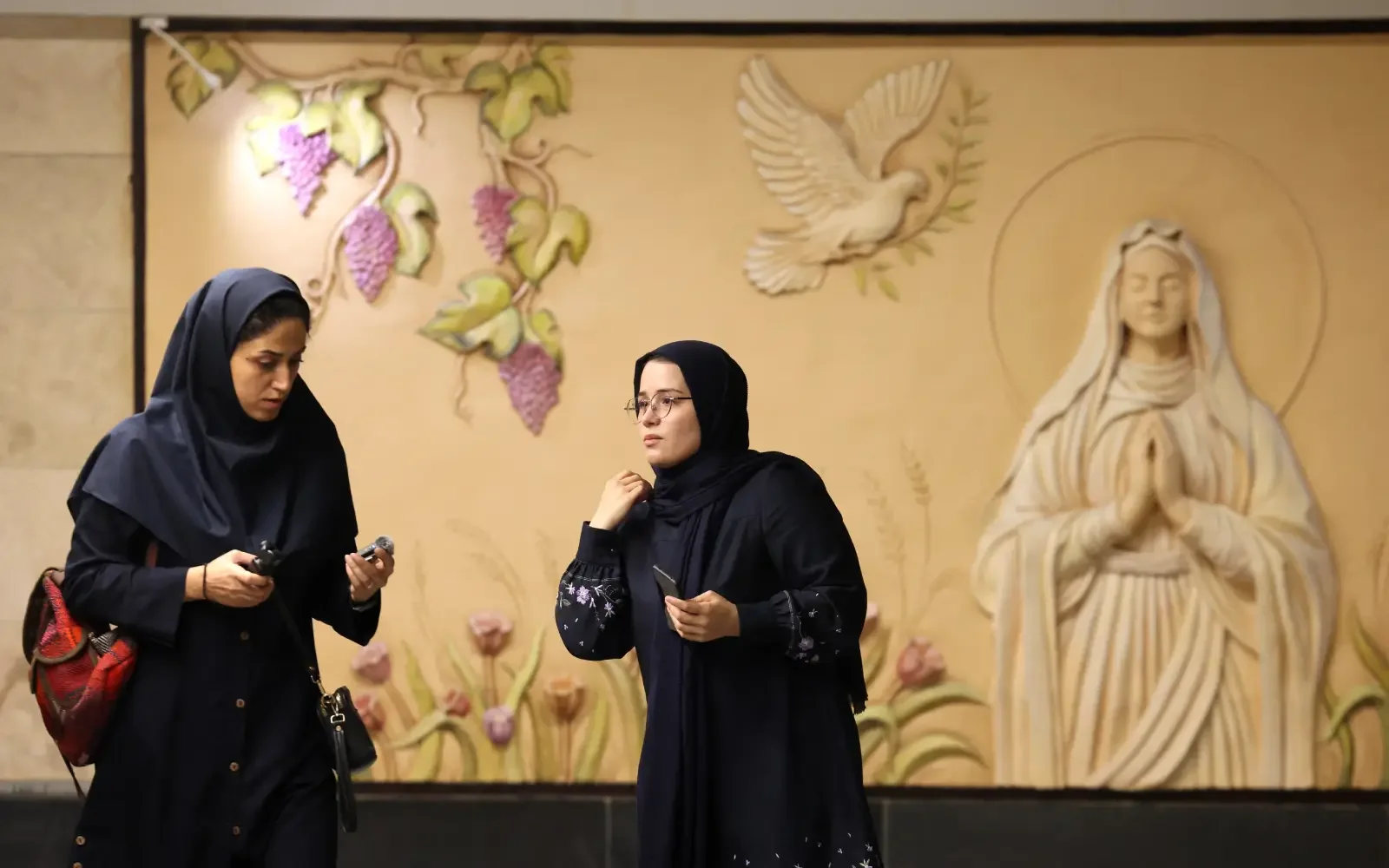
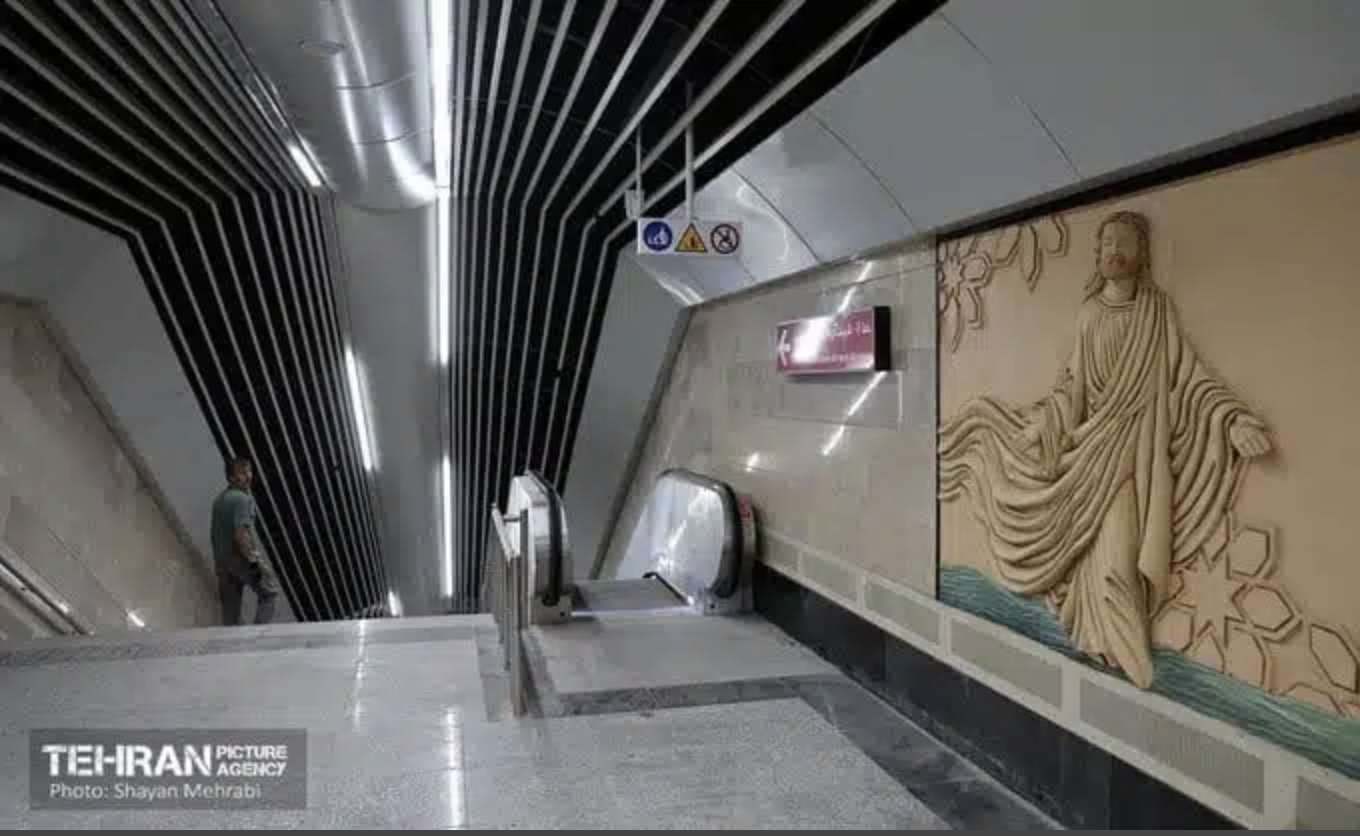
The centerpieces of the station are several intricate bas-reliefs and murals that depict the Virgin Mary, the Christ child, and the Holy Spirit. One particularly evocative panel shows Mary with her eyes gently closed in prayer, framed by a halo and surrounded by tulips—a poignant choice, as the tulip is a deeply resonant symbol in Iranian culture, representing both martyrdom and everlasting love in Islam.
The aesthetic is a marriage of Armenian Christian heritage and Persian geometric elegance. The project was commissioned by the Tehran Municipality’s Organization for Urban Art and Beautification, part of a larger effort to weave the city’s multi-religious identity into its public infrastructure.
The woman behind the vision is the Iranian sculptor Tina Tarigh Mehr. Speaking to international press at the launch, Mehr emphasized that every element—from the olive branches symbolizing peace to the dove representing the Holy Spirit—was designed to foster a sense of "respect for other religions, Christianity in particular."
The Counter-Narrative
For the cosmopolitan traveler, the existence of a "Virgin Mary Station" in the heart of Tehran is a glitch in the Matrix. The prevailing geopolitical script suggests a nation defined by an ironclad rejection of all things non-Islamic. Yet, for those who know the Quran, Maryam (Mary) is the only woman mentioned by name in the entire text, appearing 70 times and having an entire chapter (Surah Maryam) dedicated to her.
While human rights organizations rightly point to the ongoing struggles of Christian converts in the region, the Maryam-e Moghaddas station highlights a different, older reality: the presence of "recognized" religious minorities like the Armenian and Assyrian Christians, who have lived in Iran for millennia. This station is a $100$ million-plus (estimated) tribute to that coexistence, funded by the state to celebrate a community that holds five reserved seats in the Iranian Parliament.
A Bridge of Common Ground
Beyond the aesthetics, the Maryam-e Moghaddas station offers a profound philosophical opening. In a world where the "Clash of Civilizations" is often treated as an inevitability, the figure of Mary serves as a rare, high-fashion bridge between the East and the West.
Shared Veneration: For the United States and Europe, the Virgin Mary is the ultimate Western icon of grace and motherhood. For Iran, she is Maryam-e Moghaddas, the purest of women.
Cultural Diplomacy: This mural suggests that common ground doesn't have to be found in political treaties alone, but in the shared "Sacred" that both cultures deeply value.
If a Tehrani commuter and a New York gallery-goer can both look upon the same image of a mother and child with a sense of reverence, the "unbridgeable" gap between these two worlds looks a little less wide. In the cool, marbled halls of the Tehran Metro, Iran is signaling that even in a fortress of orthodoxy, there is room for the icons of the "Other"—and perhaps, a path toward a shared humanity that the headlines have long ignored.