The Magdalene Blueprint: Erika Kirk, Mimetic Desire, and the Making of a 2028 President

In the quiet aftermath of the political earthquake that was the 2024 election, a new, more esoteric architecture is being built within the American Right. It is a political machine composed of ancient hagiography, French social philosophy, and the grieving face of a young widow. At the center stands Erika Kirk, the newly minted CEO of Turning Point USA, whose sudden ascent following the assassination of her husband, Charlie Kirk, in September 2025, is being framed by some as more than just a corporate succession.
To the initiated, Kirk’s public persona is beginning to mirror the "Bride of Christ" archetype, specifically that of Mary Magdalene. But while the Magdalene of history was a figure of erasure and exile, Erika Kirk is being positioned as something far more modern and calculated: a Girardian "scapegoat" in reverse, designed to weld a movement to the future of Vice President J.D. Vance.
The Two Marys: Erasure vs. Installation
The historical and mythological parallels are striking, if inverted. According to Gnostic tradition and later scholarly reconstructions, Mary Magdalene was the "Apostle to the Apostles," the primary witness to the Resurrection and, in some traditions, the literal partner of Jesus. Yet, her legacy was famously systematically dismantled:
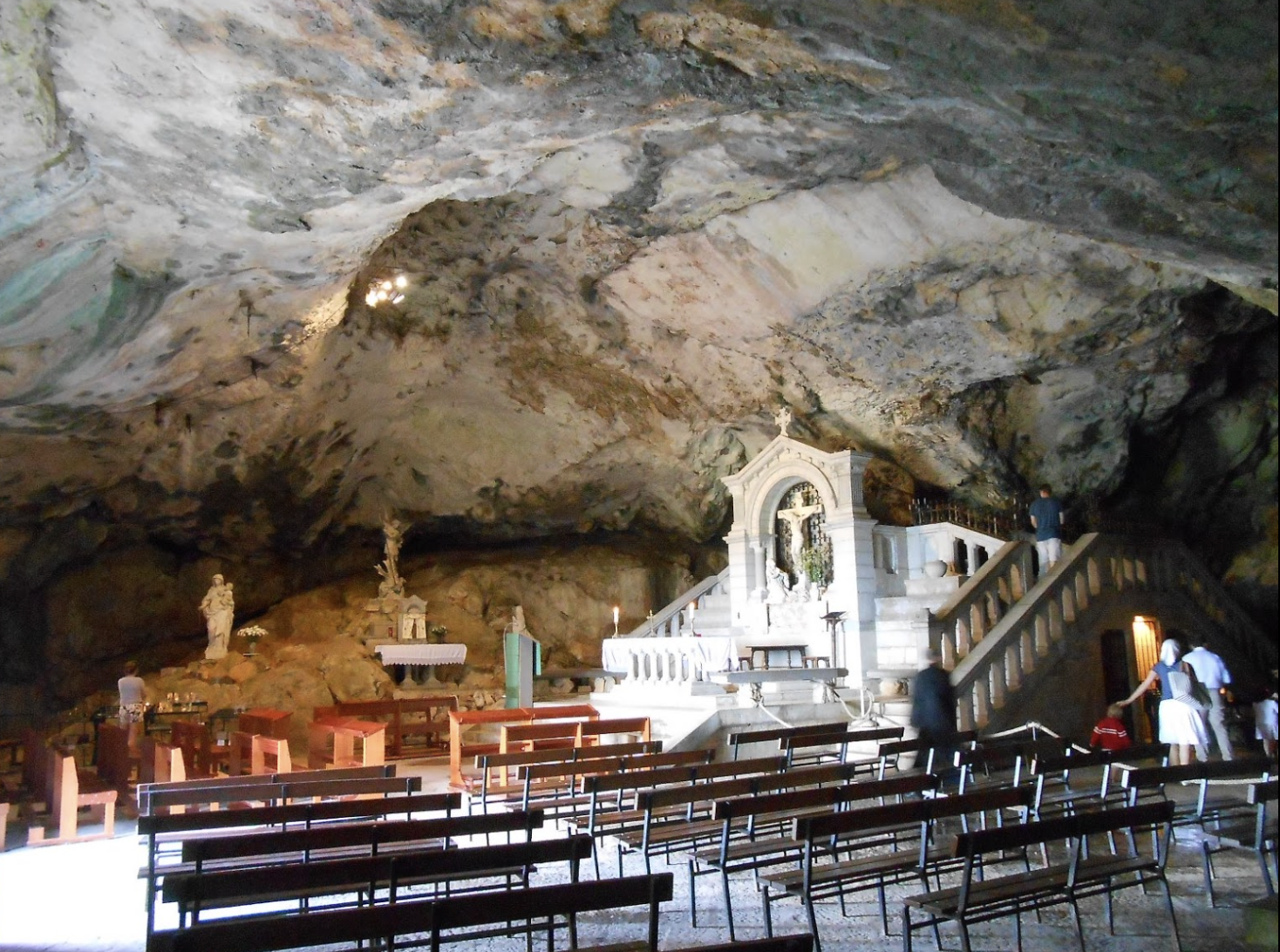
The Cave and the Exile: Legend places her fleeing Jerusalem for a cave in Sainte-Baume, France, living in solitary penance.
The Tarnished Name: By the 6th century, Pope Gregory the Great had conflated her with the "sinful woman" of Luke, effectively rebranding a spiritual leader as a redeemed prostitute.
The Removed Teachings: The Gospel of Mary was excluded from the biblical canon, her authority buried under centuries of patriarchal dogma.
In contrast, Erika Kirk is undergoing a process of installation. Where Magdalene was pushed into the shadows of a cave, Kirk has been pulled onto the stage of the Phoenix Convention Center. Since her husband's death, she has transitioned from a background figure of "biblical womanhood" and beauty pageants into a "steward of the legacy."
If Magdalene’s story is one of a woman’s voice being stolen to protect a nascent institution, Kirk’s story is one of a woman’s voice being amplified to save one. She is not being tarnished; she is being sanctified.
The Girardian Scapegoat: Unity Through Grief
The intellectual engine behind this transformation—and the link to J.D. Vance—is the philosophy of René Girard. Vance, who claims to be Catholic, has cited Girard’s "Mimetic Theory" as a cornerstone of his worldview.
Girard posited that human conflict arises from mimetic desire: we want what others want, leading to a cycle of rivalry and violence. To prevent society from tearing itself apart, Girard argued that ancient cultures used the "Scapegoat Mechanism"—identifying a single victim to bear the collective sins and anxieties of the tribe. The death or expulsion of this victim brings a temporary, cathartic peace.
In the wake of Charlie Kirk’s assassination, the "tribe" of the MAGA movement faced a mimetic crisis. Without a central agitator, the movement risked splintering into rival factions (as seen in the recent infighting between figures like Candace Owens and the TPUSA board).
Enter Erika Kirk. By stepping into the role of the grieving, "Magdalene-esque" figure, she serves as a unifying icon. She is the "innocent victim" by proxy. In Girardian terms, she is the "sacred" center that halts the mimetic rivalry. When she stands on stage with J.D. Vance, as she did last week to endorse him for the 2028 presidency, the movement’s collective grief is converted into political energy.
The 2028 Gambit: Electing Vance Through the Sacred
The final movement of this strategy is the explicit tethering of Kirk’s "sacred" status to J.D. Vance.
Vance has mastered the Girardian inversion. In his speeches, he often speaks of the "forgotten" and the "victimized," framing his constituency as the true scapegoats of a globalist elite. By aligning himself with Erika Kirk—a woman who now embodies the ultimate sacrifice of the movement—Vance inherits her "grace."
Mimetic Capture: By positioning Erika as a modern Magdalene, the campaign captures the religious imagination of the base.
The Scapegoat as King-Maker: Kirk’s endorsement of Vance for "48" (the 48th President) wasn't just a political nod; it was a transfer of the "Kirk Legacy" to a successor who shares the same philosophical language of Girardian struggle.
The Danger of the Political "Herd"
Why is this installation of a sacred icon so dangerous? History and sociology suggest several chilling consequences:
The Suspension of Critical Faculty: When a leader is wrapped in the shroud of a "sacred victim," any critique of their policy or fitness for office is reframed as an attack on the sacred itself. You are not debating a CEO; you are persecuting a martyr’s widow.
The Inversion of Accountability: In textbook Girardian fashion, the "scapegoat" (Erika) brings peace to the group by absorbing their anger toward others. This creates a "herd" mentality where the group is no longer united by a platform, but by a shared, irrational devotion to an image.
The Path to Totalitarianism: As Girard warned, when we use the concern for victims to justify our own power, we create new victims. By installing Erika as a "sacred scapegoat," the movement creates an "us-versus-them" dynamic that views all outsiders as the "persecutors" of the holy widow.
The "Fake Magdalene": A Manufactured Mirror
To make the bypass effective, the icon must be recognizable to the cultural psyche. This is where the modeling of Erika Kirk after Mary Magdalene—the "Bride of Christ"—becomes a tool of psychological engineering.
The historical Mary Magdalene was a figure of erasure. Her teachings were removed, her name was tarnished by the Church to consolidate power, and she was forced into the shadows of a cave in France. She was a threat to the institutional "bypass" of her time.
Erika Kirk is the inversion of this. She is a "Fake Magdalene"—not because her grief isn't real, but because her role is "installed" rather than organic.
The Installation: Where the real Magdalene was silenced to protect the status quo, Erika is amplified to become the status quo.
The Scapegoat in Reverse: In Girardian terms, a scapegoat usually dies to bring peace. Here, the "victim" (Charlie) has died, and Erika has been installed as the "living sacred" to ensure the peace lasts until the 2028 election.
She is a shortcut to the "sacred." By mimicking the Magdalene’s devotion to the "risen" cause, she allows the movement to skip the difficult work of self-reflection and go straight to the coronation of the next leader.
Herding the Electorate: The Vance Succession
The danger of this shortcut is most evident in its ultimate goal: the election of J.D. Vance.
Vance, perhaps more than any other politician in American history, understands the "scapegoat mechanism." In his worldview, the "elites" have scapegoated the working class; now, he is using a "sacred icon" to flip the script.
By standing alongside Erika Kirk—the "sanctified widow"—Vance is no longer just a politician; he is the "chosen heir" of a sacred lineage. This is not leadership; it is liturgical herding.
The electorate is no longer asked to think; they are asked to witness.
They are not participating in a democracy; they are participating in a succession ritual.
As Erika Kirk continues to mimic the devotion and resilience of the "Bride of Christ," she provides Vance with something policy alone cannot: a moral shield. The final movement of this strategy is the explicit tethering of Kirk’s "sacred" status to J.D. Vance. Vance has mastered the Girardian inversion. By aligning himself with Erika Kirk—a woman who now embodies the ultimate sacrifice of the movement—Vance inherits her "grace.” Kirk’s endorsement of Vance for the 2028 presidency isn't just a political nod; it is a liturgical transfer of power. By mimicking the resilience of the Magdalene, Erika Kirk provides Vance with a moral shield that is immune to secular political debate.
The installation of Erika Kirk as a political icon is not just an act of mourning; it is a sophisticated "herding" mechanism. It bypasses the brain and aims for the gut, using the ancient blueprint of the "Bride of Christ" to ensure that the path to the 2028 presidency is paved not with policy, but with the unassailable power of the sacred. The installation of Erika Kirk as a "modern Magdalene" serves a single purpose: to end the chaos of the post-2024 GOP by force of myth rather than force of argument. It is a Girardian experiment in "sacred violence" without the blood—using the trauma of an assassination to bypass the friction of a free society.
When we allow political leaders to be "installed" through the imagery of the divine and the armor of victimhood, we lose the very thing that makes a republic function: the ability to disagree with our leaders without being accused of "persecuting the sacred." The "Magdalene Shortcut" might get J.D. Vance into the White House, but it leaves the traditional route of American democracy abandoned in the cave. In this new era of investigative politics, the question is no longer just about the platform—it is about who holds the cross. For the Vance 2028 machine, that person is Erika Kirk, turning a movement's trauma into its most potent weapon.